Camping and Cabins at Tolantongo Caves
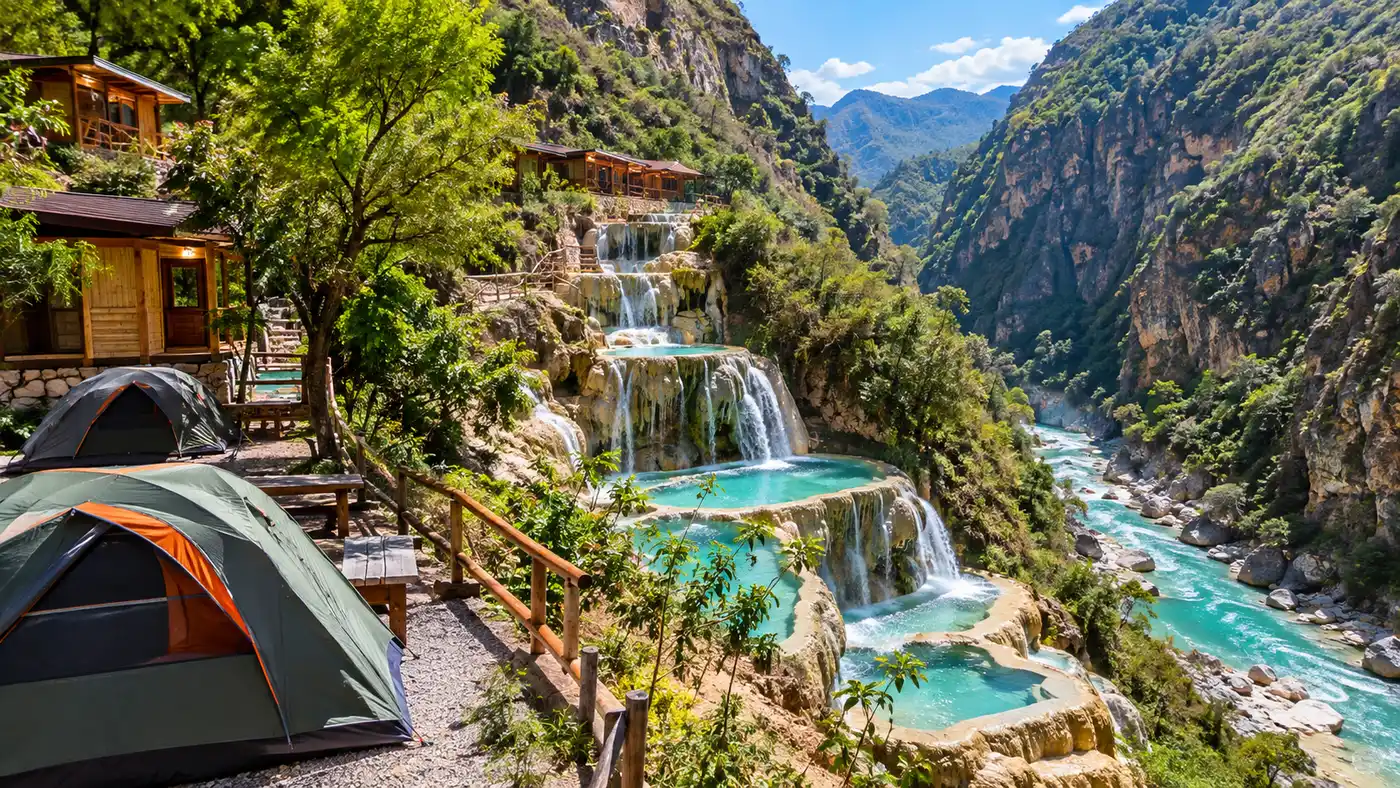
Most travelers pull into the canyon rim around midday, gaze down at the pale blue river slicing across dry mountain rock, and assume an afternoon gives them plenty of time. Sleeping in the canyon changes the whole experience. If you commit to tolantongo caves camping, you get the canyon at dusk when tour buses leave and the warm water steams quietly under limestone cliffs.
Spending the night lets you soak in the thermal river before anyone else wakes up. Your sleeping options come down to two paths: pitching a tent directly on the gravel flats along the river or renting a room or cabin up on the canyon walls. Both choices have quirks that can catch you off guard if you arrive without cash or a solid grasp of how the park operates.
Book your tolantongo caves experience:
Why Tolantongo Caves Camping by the River Beats Any Hotel
The sound of the river is deafening in a good way. The water rushes fast over smooth boulders, drowning out voices, car engines, and the occasional boombox from three campsites down. The water temperature sits around 36 to 38 degrees Celsius year-round. Because the river is so warm, it creates a cozy pocket of humid air along the canyon floor, even when cold mountain drafts sweep down the valley at 3 AM.
You can set up camp almost anywhere along the designated gravel banks of the river zone. The most popular area sits right below the suspension bridge, stretching downriver toward the lower parking lots. When you camp here, your tent door opens three steps away from warm running water. Rolling out of your sleeping bag at 6:30 AM and stepping straight into a warm current while steam curls into the dawn light is something a standard hotel room just cannot replicate.
Pro tip: Pitch your tent at least ten feet back from the immediate water edge on higher gravel, because routine water releases upstream can cause the river level to rise a few inches overnight without warning.
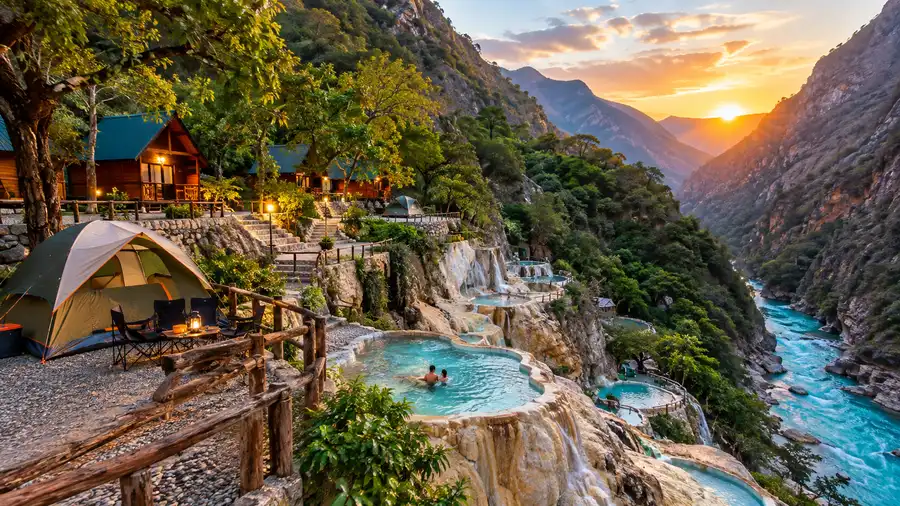
Campers get complete access to the grounds long after day visitors clear out. The big cave and the tunnel lock up around 5:00 PM, but the river never closes. Soaking under the stars with cliff walls towering hundreds of feet above you feels wild and remote, provided you skip holiday weekends when thousands of campers pack the riverbank wall to wall.
Renting Gear on Site: Costs, Mattresses, and Firewood
You do not need to lug a bulky tent through bus terminals or haul it down the mountain. The park operates rental palapas right beside the river zone where staff rent out tents, foam sleeping pads, and bags of dry mezquite wood. The equipment is basic, heavy canvas or simple nylon domes, but staff will actually carry the tent over to your chosen patch of gravel and set it up for you.
Sleeping on bare river gravel is impossible without padding. The stones are round, hard, and uneven. If you do not bring a thick self-inflating mattress, you must rent at least one colchoneta per person. These are vinyl-covered foam pads about two inches thick. They make the difference between sleeping soundly and waking up with bruised hips.
| Rental Item | Price (MXN) | Approx. Price (USD) | Notes |
|---|---|---|---|
| 4-Person Tent | $150 | $8.50 | Set up included by park staff |
| 6-Person Tent | $200 | $11.50 | Better height for changing clothes |
| Foam Pad (Colchoneta) | $100 | $5.75 | Mandatory for gravel sleeping |
| Firewood Bundle | $80 | $4.60 | Dry wood with kindling |
| Metal Grill Grate | $50 | $2.85 | Rests on river stones over coals |
| Locker Rental | $80 | $4.60 | Requires additional cash deposit |
Renting gear requires leaving an official ID or a cash deposit at the rental booth. Keep your receipt tucked in a dry pocket. When you return the items in the morning, the staff inspect them, hand back your deposit, and cross your name off their ledger.
Campfires are allowed along the riverbank. Grabbing a bundle of wood from the rental stand gives you a warm fire to sit around when the canyon breeze turns chilly. You will see Mexican families setting up elaborate grills with marinated beef, spring onions, and roasted nopales. If you brought your own food, rent a simple metal grate to lay across river rocks over your coals.
Tolantongo Caves Cabana and Hotel Room Options
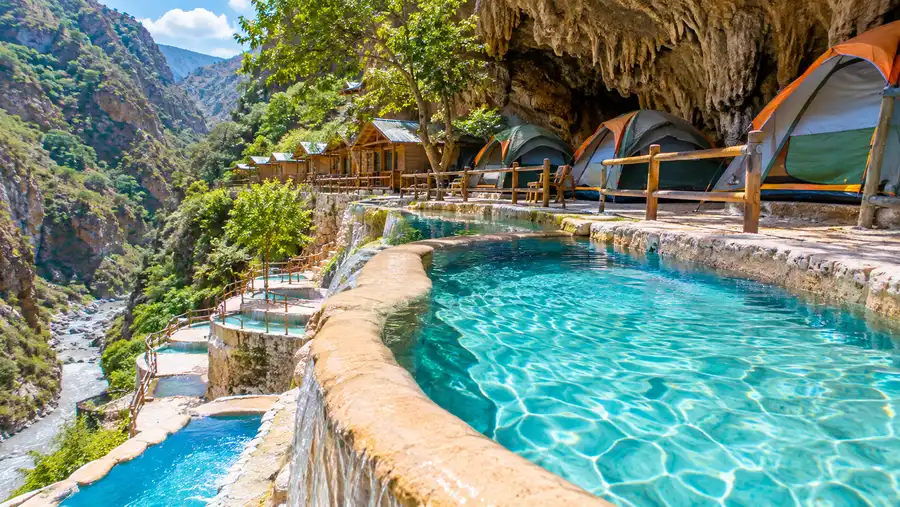
Tents are not for everyone. If sleeping on gravel sounds miserable, the park has roughly 300 lodging units split across four distinct hotel complexes: Hotel La Gruta, Hotel Paraíso Escondido, Hotel La Huerta, and Hotel Molanguito. A private tolantongo caves cabana or hotel room gives you four walls, a locking door, and a private bathroom, though the amenities remain rustic.
Hotel La Gruta sits right down by the river and the main cave entrance. It offers the best location for swimming, but the rooms fill up first. Hotel Paraíso Escondido sits high up on the opposite canyon wall, directly next to the famous cliffside thermal pools (las pocitas). Staying up there means fewer stairs to reach the soaking tubs in the morning, but you face a long walk down to the river unless you take the local shuttle van for 10 pesos.
The cabins near Paraíso Escondido and La Huerta offer concrete walls, basic beds with thin blankets, tiled floors, and ceiling fans. You will not find air conditioning, televisions, or Wi-Fi in these rooms. The canyon walls block most cellular data signals, so expect to be off the grid once you check in.
Note: Check-out time for all rooms and cabins is strictly 12:00 PM, and staff do not grant late check-outs because cleaning crews turn every room around immediately for travelers on the afternoon waiting list.
None of these rooms can be reserved online or over the telephone. Every single room operates on a walk-up, first-come, first-served basis. During weekends, rooms sell out by 9:00 AM. Arriving on a Friday or mid-week gives you a decent chance of landing a room, but arriving Saturday morning almost guarantees you will be sleeping in a tent or driving two hours back out to Ixmiquilpan.
Book your tolantongo caves experience:
Debunking the Grutas de Tolantongo All Inclusive Myth
Travelers regularly search for a grutas de tolantongo all inclusive resort package or expect a tolantongo caves all inclusive deal on hotel booking portals. That setup does not exist anywhere in this valley. Tolantongo is an ejido, a cooperative community property managed entirely by roughly 112 local native families from the San Cristóbal community. There are no corporate resort chains, no wristbands that cover drinks, and no buffet packages.
Everything runs on an unbundled, cash-only system. You pay for park entry, you pay for your campsite or room, you pay for your locker, and you pay for every taco, bottle of water, and beer individually. The park does not accept credit cards, debit cards, or foreign currency anywhere on the mountain. There are no ATMs in the canyon, and the nearest cash machine sits in Ixmiquilpan, about an hour away on steep switchback roads.
- Admission rule: Park tickets cost around $200 MXN per person per calendar day, not for a 24-hour period.
- Overnight cost calculation: Staying one night means you must purchase two separate single-day admission tickets per person to cover both the arrival and departure days.
- Child ticket policy: Children under age five enter free, while kids five and older pay the full standard adult admission price.
- Parking fee: Drivers pay a flat vehicle fee of about $30 MXN per day to park in the secure canyon lots.
If you show up thinking your room payment covers your second day in the thermal water, the gate attendants will stop you. When you enter on Monday and leave on Tuesday, you must buy your Monday wristband at the gate, then buy your Tuesday wristband the following morning at the hotel reception or ticket booth. Factor this quirk into your travel budget before heading down the mountain.
Practical Advice for Surviving and Enjoying Tolantongo Caves Camping
Camp life in the canyon requires a little street smarts. The public bathrooms along the riverbank are staffed constantly, and attendants keep them reasonably clean, but you must bring your own toilet paper. You can buy pocket tissue packs at the small convenience stalls for 10 pesos, though bringing a whole roll from home saves you hassle. Hand soap is rarely stocked at the sink troughs.
Showers near the campsites run cold, fed directly from local spring lines. If you want a warmer wash, walk up to the bathroom blocks near Hotel La Gruta or the upper pools, where the water comes out lukewarm from geothermal runoff. Wear water shoes everywhere, including in the shower stalls, on the paths, and inside the river. The rocks are slippery with mineral deposits, and sharp limestone points hide under the rushing water.
- Heavy dry bag: Essential for keeping your phone, wallet, and clean clothes dry while you hike along wet trails.
- Quality headlamp: Riverbank paths have minimal artificial lighting after 9:00 PM, making a hands-free light necessary for midnight bathroom trips.
- Quick-drying microfiber towel: The canyon air stays humid, meaning heavy cotton bath towels stay damp for days.
- Insect repellent: Small biting gnats (jejenes) appear near the river foliage around sunset and leave itchy welts.
- External power bank: Tents have no power outlets, and hotel rooms have only one or two wall plugs that charge slowly.
Stray dogs wander the camping zones constantly. They are generally gentle and spend their days begging for taco scraps from picnickers. Keep your food packed inside hard coolers or zipped deep inside your tent bag. If you leave a bag of bread or cooked meat sitting on your picnic table overnight, the neighborhood dogs will find it before sunrise.
Trash disposal is taken seriously by the community staff. Metal barrels sit every twenty yards along the gravel bank. Bag your garbage and drop it in the bins so the river stays clean. The local ejido works hard to keep this natural marvel in good condition, and watching campers respect the land keeps the relationship between locals and visitors friendly.
Frequently Asked Questions about tolantongo caves camping
Do I need an advance reservation to camp at Tolantongo?
No, the park does not accept reservations for camping. You simply show up, pay your daily entrance fees at the highway gate, find an open spot along the designated riverbank, and rent your tent on site or pitch your own gear.
Can I bring my own camping gear and food into the park?
Yes, you are completely free to bring your own tent, sleeping pads, coolers, food, and non-alcoholic drinks without paying extra fees. Glass bottles are forbidden inside the thermal zones for safety reasons.
Is camping along the river safe overnight?
Yes, security staff and local ejido members patrol the canyon grounds on foot with flashlights throughout the night. The camping areas feel peaceful, family-oriented, and secure, though you should keep valuables locked in a rented locker or vehicle trunk.
What happens if it rains heavily while I am camping?
Heavy mountain rain turns the milky turquoise river brown due to mud runoff from upstream ravines. If river levels rise dangerously during severe summer downpours, park staff will sound whistles and move campers to higher ground or covered shelters.
Quick Reference
- Camp gear rentals: $150 to $200 MXN per tent
- Two-day entry pass required for one overnight stay
- Zero cash machines on site; cash only
- Cabins are walk-up only, no phone or online bookings
- Water temperature: 36 to 38 degrees Celsius
Book your tolantongo caves experience:
The Bottom Line
Sleeping by the river at Tolantongo is messy, damp, and slightly chaotic, but waking up to the turquoise water before the tour buses roll down the canyon wall is worth every bit of river gravel under your mattress. Skip the weekends if your schedule allows, pull enough cash from an ATM in Mexico City or Pachuca to cover your gear and food, and embrace the simple joy of sleeping outdoors next to a steaming river.
Read more about tolantongo caves.